Oceana Group posts flat revenue, drop in profit amid challenging drop in fish oil prices
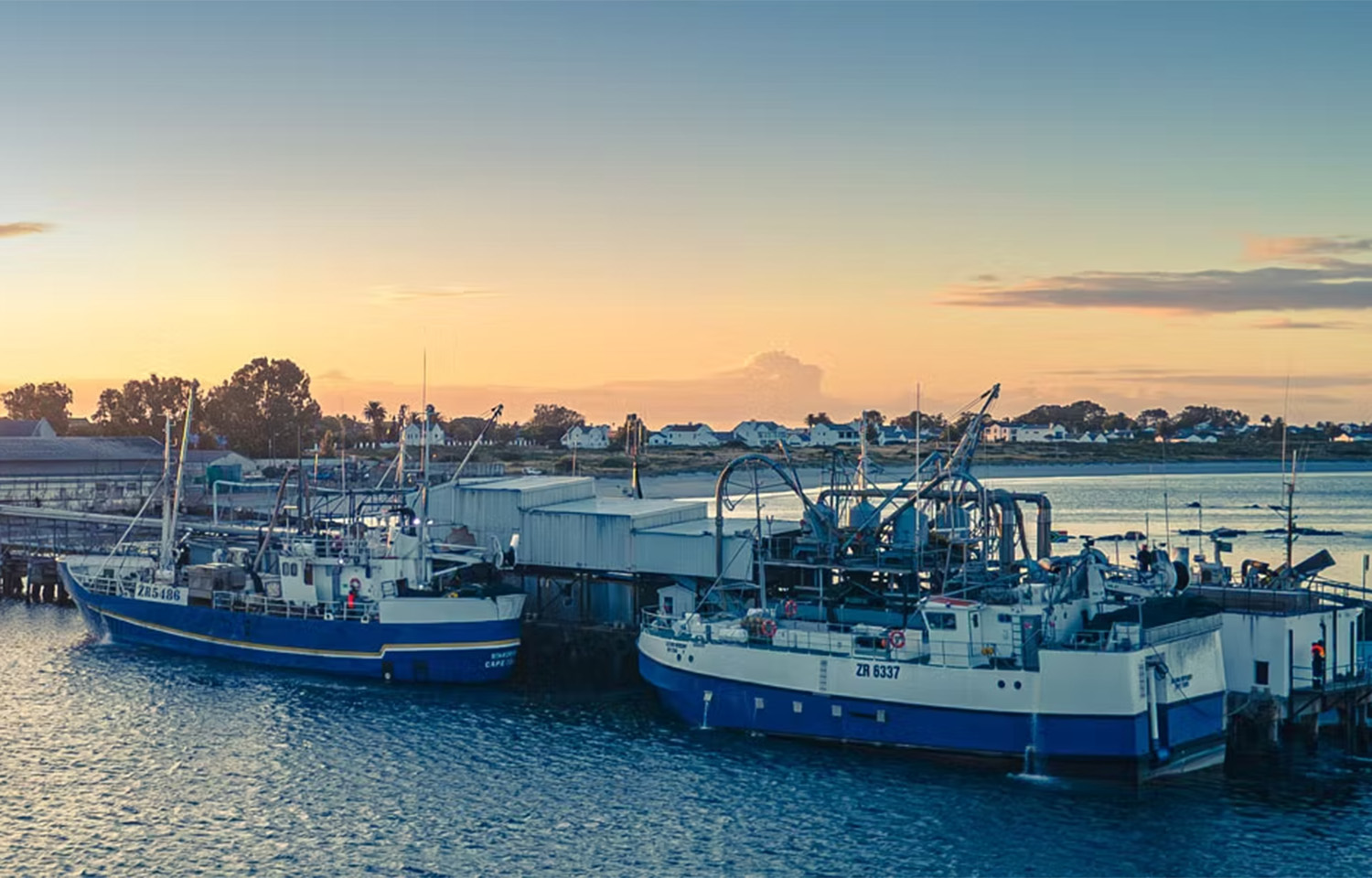
South Africa-based Oceana Group posted relatively flat revenue and a decrease in profit in FY 2025 but said its results were solid given drops in pricing for its commodity products.
Oceana Group saw a boost in revenue in 2023 and 2024 as a cancellation and reduced catch totals in the Peruvian anchoveta fishery led to higher fish oil and fishmeal prices – two main products for the company.
In its full-year results ending September 2025, Oceana Group said fish oil prices had halved compared to the previous years, but it maintained revenue through a strong turnaround in its wild caught seafood segment and its Lucky Start Foods brand.
Oceana Group posted revenue of ZAR 9.99 billion (USD 586 million, EUR 503 million) in the financial year ending September 2025, down slightly from ZAR 10.06 billion (USD 590 million, EUR 507 million) in 2024. Gross profit dropped slightly to ZAR 2.77 billion (USD 162 million, EUR 139 million), down from ZAR 3.12 billion (USD 183 million, EUR 157 million).
“We have controlled what we can well, with most key indicators improving,” Oceana Group CEO Neville Brink said in a release. “The African and U.S. fishmeal and fish oil businesses delivered strong operational performances, but softer global fish oil prices impacted revenue and profitability.”
The company said its fishmeal and fish oil revenue in its African division increased slightly, reaching ZAR 885 million (USD 51.9 million, EUR 44.6 million) in FY 2025, up from ZAR 877 million (USD 51.4 million, EUR 44.2 million) the prior year. That increase in revenue was in part due to a 25 percent increase in production volumes, including better fish landings and higher pilchard trimmings from canneries.
The fish oil and fishmeal segment in Africa was dragged slightly by the U.S. division, which saw a significant drop in revenue to ZAR 2.37 billion (USD 139 million, EUR 119 million) in FY 2025, down from ZAR 3 billion (USD 176 million, EUR 151 million) in 2024. That was in spite of a 36 percent increase in sales volumes, with Oceana Group blaming a 9 percent drop in the average U.S. dollar price of fishmeal and a 53 percent drop in the average price of fish oil.
Lucky Star Foods made up for some of the drop in the fish oil and fishmeal segments.
Brink said Lucky Star Foods – a brand which the company has expressed optimism about in the past – was as “solid as ever,” with strong demand for the product and volume sales increasing by 2 percent to 9.5 million cartons, despite what the company called a “challenging consumer environment.”
“Strong export demand and expansion into canned meats drove higher sales, growing canned food’s share to nearly 10 percent of Lucky Star’s total sales volumes,” Oceana Group said.
The company said it produced 24 percent more cartons in the period, which resulted in lower unit production costs at canneries. FY 2025 was also unaffected by factory upgrades the company undertook in FY 2024.
All told, Lucky Star Foods earned ZAR 4.84 billion (USD 284 million, EUR 244 million) in revenue in FY 2025, up from ZAR 4.56 billion (USD 267 million, EUR 229 million) in FY 2024.
The wild-caught seafood segment also posted a significantly higher operating profit, which also helped offset the effects of the drop in U.S. fishmeal and fish oil prices. Wild-caught seafood posted revenue of ZAR 1.82 billion (USD 106 million, EUR 91 million) in FY 2025, up from ZAR 1.53 billion (USD 89 million, EUR 77 million).
“The benefits of the investment in the hake fleet were evident, with more reliable vessels able to spend more days at sea,” Oceana Group said. “This allowed the fleet to achieve 33 percent higher catch volumes, driving unit catch costs lower.”
Sales volumes for the wild-caught segment also increased, and strong demand in Europe helped improve prices for hake, which helped boost the segment’s performance.
The company’s solid performance despite the big drop in prices for fish oil have proven its ability to react to market shifts, Brink said.
“This demonstrates the resilience of our diversified business model,” Brink said. “Our diversification across species, markets, currencies, and geographies, combined with the recent investments in our factories and fleets, positions the Group to capitalize on opportunities resulting from cyclical improvements in resource availability and market demand, as well as stronger pricing.”
As Oceana Group posted a solid FY 2025, one of its major investors announced it plans to divest some of its portion of the company.
Brimstone Investment Corporation said it is planning to sell some of its portion of Oceana Group. The company said it is selling ZAR 633.4 million (USD 37 million, EUR 32 million) worth of its stake in the company comprising 11.9 million shares, representing 9.2 percent of Oceana’s issued share capital.
Brimstone said the funds gained from the move will be used to reduce its funding obligations in the near term.
link